Wholesale Sanding Discs Australia: How Panel Shops Choose a Trade Supplier for Bulk 150mm Discs
A practical guide for Australian panel shops comparing trade suppliers, bulk pack logic, ceramic options, and 15-hole setups.
A good wholesale sanding discs supplier in Australia does more than offer a lower carton price. For busy panel shops, the right supplier helps standardise bulk 150mm discs, keep core grits in stock, reduce clogging on filler work, improve dust extraction during prep, and make repeat ordering easy when the workshop is flat out.
If you are buying bulk 150mm discs for a panel shop, the wrong question is “What’s the cheapest box?” The better question is “Which supplier helps us get through filler, primer and paint prep with fewer disc changes, less clogging, cleaner extraction, and no stock headaches next week?”
That is how most trade buyers look at it once the shop is busy. A supplier is not really being judged on carton price alone. They are being judged on cut rate, finish consistency, stock reliability, pack logic, and how easy it is to reorder when the bench is full and three jobs are already lined up.
Best for this guide
- Panel shops buying bulk 150mm sanding discs
- Workshop managers standardising grit ranges
- Trade buyers comparing ceramic vs standard discs
- Shops deciding whether 15-hole sanding discs are worth it
Key takeaways
| What to check | Why it matters in a panel shop | What good looks like |
|---|---|---|
| Stock consistency | You do not want to change disc type every time one grit goes out of stock. | Reliable repeat supply in the grit ranges your shop burns through most. |
| Cut and disc life | Cheap discs often dull early, glaze up, and slow the whole prep stage down. | Fast initial cut, stable scratch pattern, less clogging on bog and primer. |
| Dust extraction | Cleaner sanding means less mess, better visibility, and fewer defects carried into the next stage. | Disc and pad setup that actually suits your shop’s extraction system. |
| Pack sizes | Buying the wrong quantities ties up cash in slow-moving grits. | Bulk where usage is heavy, smaller or mixed packs where demand is patchy. |
| Reordering | When filler work is stacked up, nobody wants a clunky account process. | Fast quotes, clear trade terms, and simple repeat ordering. |
| Technical advice | The wrong disc recommendation creates waste, inconsistency, and unnecessary SKU sprawl. | A supplier helps match disc type to filler, primer, and paint-prep stages. |
| Cost per job | The cheapest disc on paper can be the expensive option on the bench. | Lower labour drag, fewer disc swaps, and less rework. |
What panel shops should look for in a trade sanding discs supplier
The shops that buy well tend to look at six things straight away: supply consistency, disc performance, extraction compatibility, sensible pack quantities, account support, and advice that actually matches the work being done. Price matters, but it is not sitting there on its own.
1. Stock that stays consistent
A trade supplier has to be boring in the best way. Same product. Same spec. Same result. If your team likes a certain 150mm disc in 80, 180, 320 and 600, you want that exact system to be there again on the next order. Swapping brands or backing types mid-flow creates unnecessary variation, and that usually shows up on the job.
2. Discs that hold their cut
Panel shops notice very quickly whether a disc keeps biting or goes dead halfway through the repair. On the bench, that changes pressure, sanding time, and finish quality. It also changes labour cost. A disc that lasts longer and cuts cleaner is often the cheaper buy, even when the per-disc number looks higher.
3. Extraction that suits the way the shop actually works
Dust control is not a side issue. It affects finish quality, housekeeping, visibility, and how long a disc stays useful. If the setup is right, there is less dust sitting on nearby panels, less mess around the prep bay, and less clogging during primer and paint prep.
4. Reordering that does not waste workshop time
Most trade buyers are not looking for a dramatic buying experience. They want quick answers, clear pack options, trade pricing that makes sense, and a reorder path that does not turn into email tennis. If the supplier is slow when you need a repeat order, the headline price stops looking attractive very quickly.
5. Pack quantities that fit real usage
Bulk buying only works when it reflects what the shop actually burns through. Core filler and prep grits can justify bigger quantities. Slow-moving fine grits usually do not. Good suppliers help you buy heavier where usage is real and lighter where it is not.
6. Advice that matches the work you actually do
A good supplier should help a shop simplify its stock list, not just sell more SKUs. That means helping you standardise your core 150mm system, choose where ceramic actually makes sense, and avoid stocking random grits that sit on the shelf for months.
Supplier types panel shops usually compare
Most workshops end up comparing four types of supplier when buying wholesale sanding discs in Australia. They are not all equal once the shop gets busy.
| Supplier type | What it usually does well | Where it often falls short |
|---|---|---|
| Hardware chains | Easy to access for one-off top-ups | Usually weak on trade continuity, abrasive depth, and workflow advice |
| Online marketplaces | Cheap-looking upfront pricing | Inconsistent supply, mixed quality, random listing changes, harder repeat ordering |
| Direct manufacturer/importer | Can be strong on pricing and range depth | May be less flexible for smaller or mixed-volume workshop needs |
| Specialist trade abrasives supplier | Better stock continuity, better grit planning, stronger product advice, easier repeat supply | May not always have the lowest per-box headline price |
For most panel shops, specialist trade suppliers are the easiest long-term fit. They are usually better at keeping the same product family available, helping standardise grit ranges, and supporting repeat ordering without constant guesswork.
Why bulk 150mm sanding discs are the standard for refinishing work
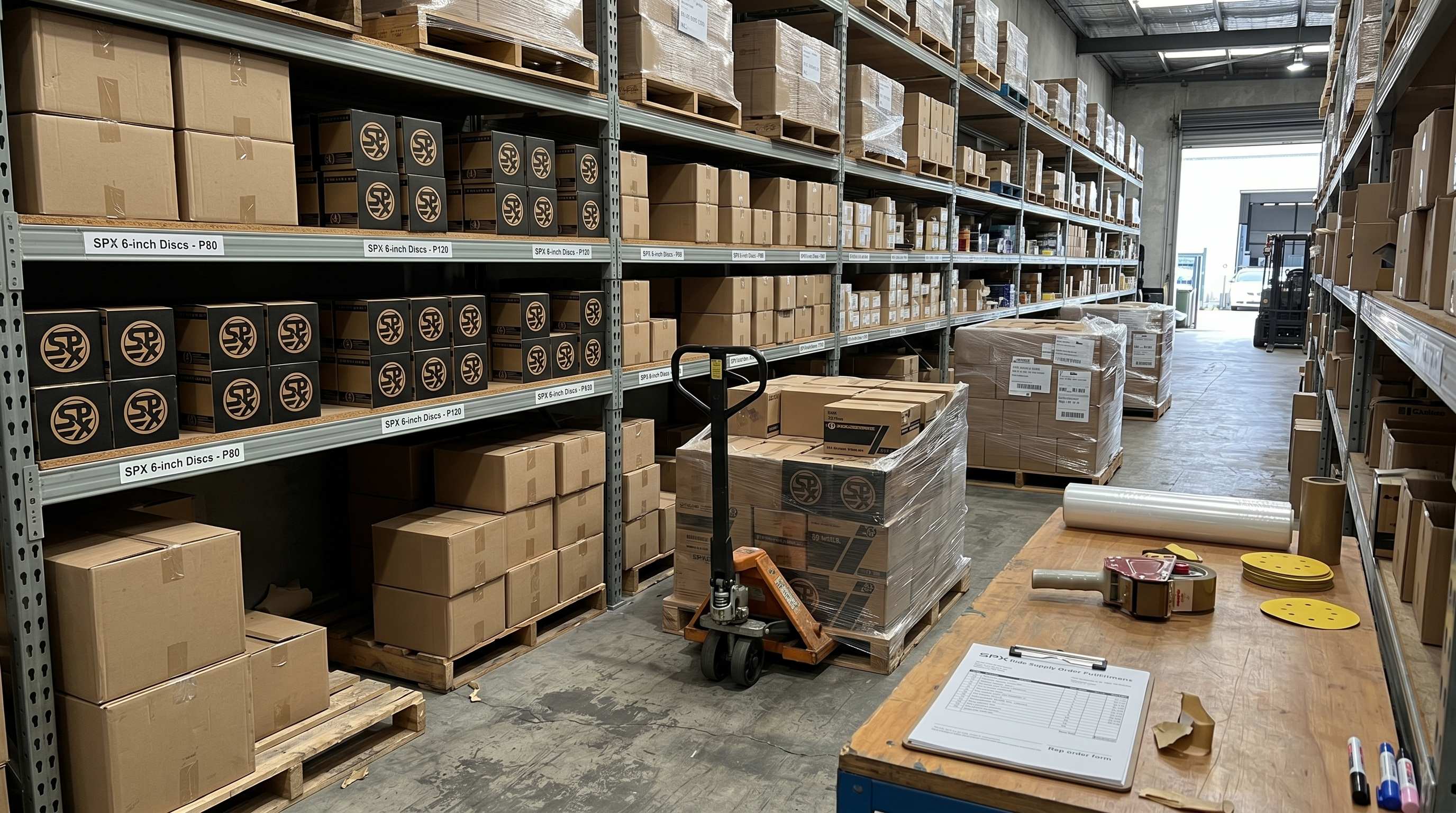
For a lot of Australian panel shops, 150mm is the practical centre of the sanding system. It suits common DA workflows, it covers a useful amount of surface without feeling clumsy, and it gives buyers a straightforward way to standardise stock across filler shaping, primer prep, and general paint work.
That standardisation matters more than people admit. Once a workshop settles on a 150mm system, the buying becomes simpler. Pads match. Grit planning is easier. The team knows what each disc does. Apprentices are less likely to grab the wrong format. And the supplier can build a more sensible bulk order around actual usage instead of guesswork.
Why shops buy 150mm in volume
- It reduces tool-and-consumable variation across the prep area.
- It makes it easier to hold core grits in stock.
- It supports faster training for apprentices and new staff.
- It keeps repeat orders cleaner because the product family is tighter.
- It simplifies storage and reduces ordering mistakes.
What to standardise first when buying sanding discs in bulk
If a shop is trying to tighten up its abrasive buying, do not try to optimise everything at once. Start with the parts of the system that affect daily workflow the most.
- Lock in one main format. For most panel shops, that is 150mm.
- Choose your core grits first. Focus on the 4 or 5 grit ranges the shop burns through every week.
- Decide where ceramic actually pays. Usually this is filler shaping and heavier repair work, not every stage of every job.
- Decide whether your extraction setup justifies 15-hole. If the shop already runs that pattern, it usually makes sense to stay with it.
- Avoid overbuying slow-moving fine grits. Buy light there unless your correction volume is genuinely high.
The goal is not to create the biggest possible abrasive range. It is to make the workshop easier to run, easier to reorder, and less likely to lose time because someone grabbed the wrong thing or a key grit ran out.
When ceramic sanding discs are worth buying in bulk for bog and filler work
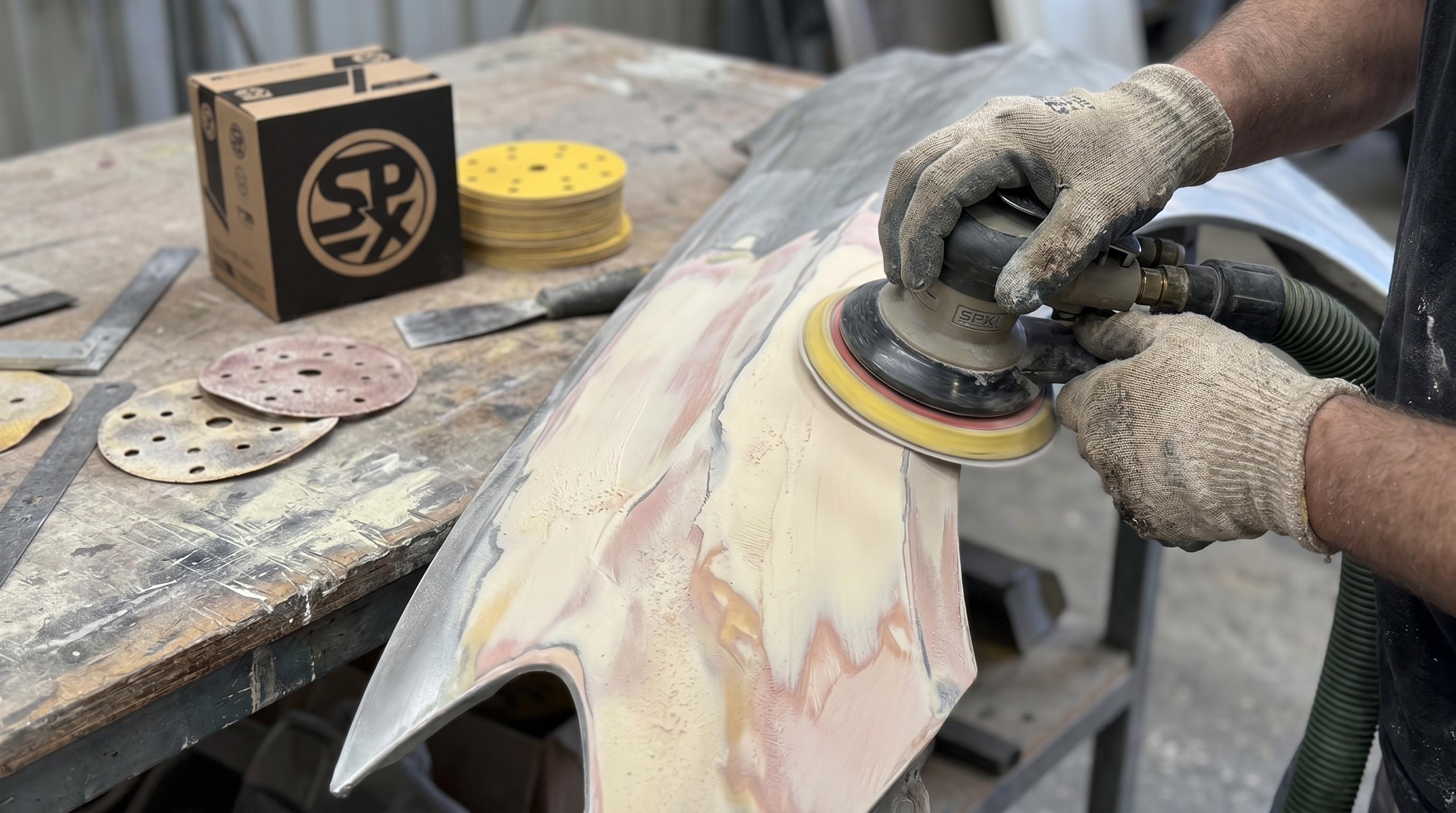
Ceramic starts making real sense when the shop does steady bodywork and burns through coarse and mid-range grits every week. Bog and filler are where cheap discs often get exposed. They load up, stop cutting, and force the tech to lean harder or change discs sooner than they should.
If that sounds familiar, ceramic is usually worth a serious look. Not because it sounds premium, but because it often holds cut better under pressure. That is the stage where cost per job starts beating sticker price.
Where ceramic earns its keep
- Initial filler shaping where you need bite without the disc going dead too early
- Refining contour where consistency matters more than brute aggression
- Busy shops where fewer swap-outs save time across the day
- High-volume repair work where clogging becomes a constant cost
| Workshop situation | Is ceramic usually worth it? | Reason |
|---|---|---|
| Heavy filler shaping every week | Usually yes | Better cut retention and fewer dead discs mid-job |
| Busy repair volume across multiple techs | Usually yes | Less time lost to disc changes and clogging |
| Occasional light filler work only | Maybe not | A standard disc may be enough if usage is low |
| Shops mainly focused on lighter prep stages | Often not the priority | The biggest payoff is usually earlier in the repair flow |
When 15-hole sanding discs make sense for spray painting prep
Not every shop needs to chase the newest sanding format. Plenty of teams simply need a disc that matches the pad system already on the bench and improves extraction without complicating stock. That is where 15-hole 150mm discs make sense.
They are a practical choice for primer sanding, paint prep, and general refinement when the workshop is already set up around 15-hole pads. You are not forcing a new system into the shop. You are tightening the one you already use.
15-hole is usually the right move when:
- the shop already runs 150mm 15-hole backing pads
- dust extraction matters, but a full system change is unnecessary
- you want a cleaner prep stage before primer or colour
- you need a repeatable trade setup across multiple technicians
15-hole may not be the first thing to prioritise when:
- your shop is not already built around that pad pattern
- extraction is inconsistent anyway and other workflow issues are bigger
- you are trying to solve a cut-rate problem rather than a dust problem
- you still have not standardised your core grit range
Price per disc vs cost per job: how trade buyers should compare suppliers
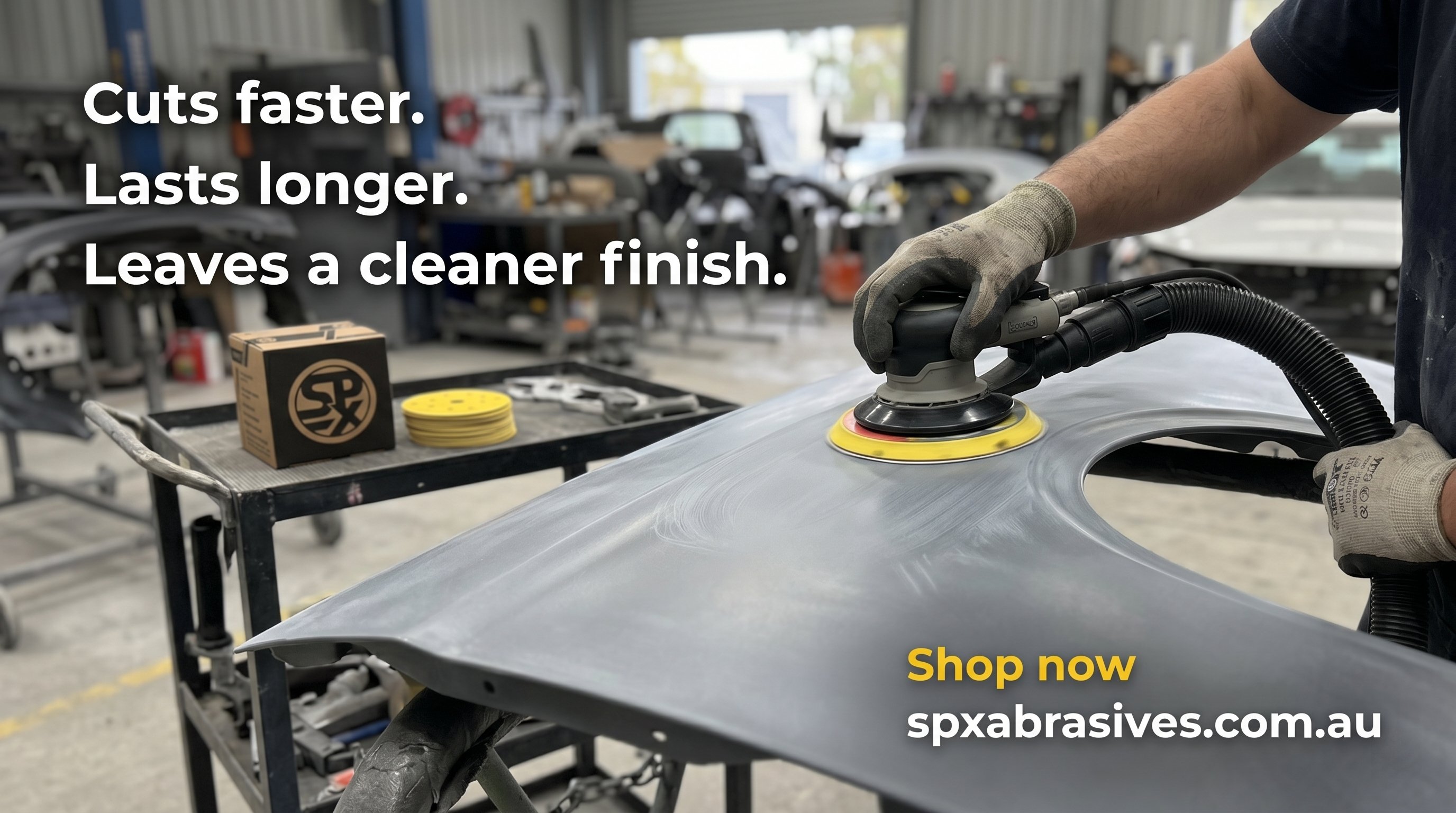
This is where smart buyers pull away from reactive buying. The cheap box often wins the first glance. The better supplier wins the month.
Why? Because workshops do not run on unit price alone. They run on labour, pace, and rework. A disc that costs less but needs more change-outs, clogs on filler, or leaves a messy scratch pattern can quietly burn money all day.
| Comparison point | Cheap per-disc option | Trade-ready option |
|---|---|---|
| Upfront disc price | Lower | Higher |
| Cut speed | Often fades early | More consistent through the job |
| Clogging on bog/filler | Usually worse | Usually better |
| Disc changes | More frequent | Less frequent |
| Dust control | Patchy | Better suited to extraction systems |
| Finish consistency | More variation | More predictable |
| True cost to the shop | Often higher than it looks | Often lower than it looks |
Worked example: why the cheaper disc is not always cheaper
| Example job | Cheap disc option | Better-performing disc option |
|---|---|---|
| Disc price | $0.55 each | $1.05 each |
| Discs used on one filler/prep job | 4 discs | 2 discs |
| Total disc cost | $2.20 | $2.10 |
| Change-outs and lost rhythm | Higher | Lower |
| Likely labour drag | Higher | Lower |
| Overall value | Looks cheaper, often is not | Looks dearer, often saves more |
Even before labour is counted, the “cheap” option is not ahead in this example. Once you add the extra time from more swap-outs, slower cut, and more pressure on the tool, the gap usually gets worse. That is why experienced trade buyers compare cost per job, not just price per disc.
The cheap box wins the quote. The better disc often wins the workshop.
Questions to ask before opening a wholesale abrasive account
If you are comparing suppliers, ask the questions that expose day-to-day reliability, not just the sales pitch.
Stock questions
- Which 150mm disc lines do you keep in stock all the time?
- What pack sizes are available in the grits we use most?
- Can you keep the same product family consistent across our core grits?
Performance questions
- Which discs do you recommend for filler, primer, and final paint prep?
- Do you have a ceramic option for heavier bodywork?
- Do you carry 15-hole options that match our current pad setup?
- Can you help us simplify our grit range instead of overselling extra SKUs?
Account and delivery questions
- How fast can you turn around repeat orders?
- Is there a clear trade account or wholesale ordering path?
- How easy is it to repeat the same order once the shop locks in its core setup?
The best answer is usually the simplest one. A supplier that understands panel shop workflow will not try to overcomplicate the range. They will help you narrow the order to the discs you actually consume.
Best bulk-buy setup for filler, primer, and paint prep
A tidy wholesale order usually follows the repair flow. Buy heavier in the grits the shop burns every week. Stay lighter in the niche finishing grits unless your volume says otherwise.
| Repair stage | Typical grit range | What to buy in bulk | Buy heavy / buy light | Notes for the buyer |
|---|---|---|---|---|
| Body filler shaping | 80 grit | Core 150mm discs, often ceramic if filler work is constant | Buy heavy | Usually one of the fastest-moving grits in a panel shop. |
| Contour refining | 120–180 grit | Strong repeat stock in your preferred disc line | Buy heavy | Critical stage for keeping scratch pattern under control. |
| Pre-primer smoothing | 240–320 grit | Steady bulk quantities | Medium-heavy | Often worth standardising across the whole team. |
| Primer sanding | 400–600 grit | Regular trade packs, especially for spray-prep-heavy shops | Medium | 15-hole options make sense where extraction and cleaner prep matter. |
| Nibs and fine correction | 1500–2000+ | Smaller volumes unless your shop does a lot of finishing correction | Buy light | Do not tie up too much cash in slow-moving fine grits. |
For buyers who want to build the order around use case, not just grit, these are the most relevant internal paths:
FAQ: wholesale sanding discs Australia
What counts as a good trade sanding discs supplier?
A good trade sanding discs supplier gives you consistent stock, sensible pack sizes, reliable disc performance, and an easy reorder path. A cheap supplier is not always a good supplier.
Should panel shops compare price per disc or cost per job?
Cost per job is the better measure. It accounts for disc life, change-out time, clogging, finish consistency, and the labour drag that cheap abrasives can create.
Are ceramic sanding discs for bog worth buying in bulk?
Yes, when your shop does regular filler work. That is where longer life and cleaner cutting tend to pay back fastest.
Do all shops need 15-hole sanding discs for spray painting?
No. They make the most sense when your existing 150mm DA setup already suits 15-hole pads and you want cleaner extraction without changing the whole system.
What should a first wholesale order include?
Start with the core grits you burn through every week: the filler-shaping range, the contour-refining range, and the primer-prep range. Leave slower-moving fine correction grits for smaller follow-up orders unless your shop uses them heavily.
Written for Australian panel shops, spray painters, workshop managers, and trade buyers who need bulk abrasive supply that actually holds up on the job.
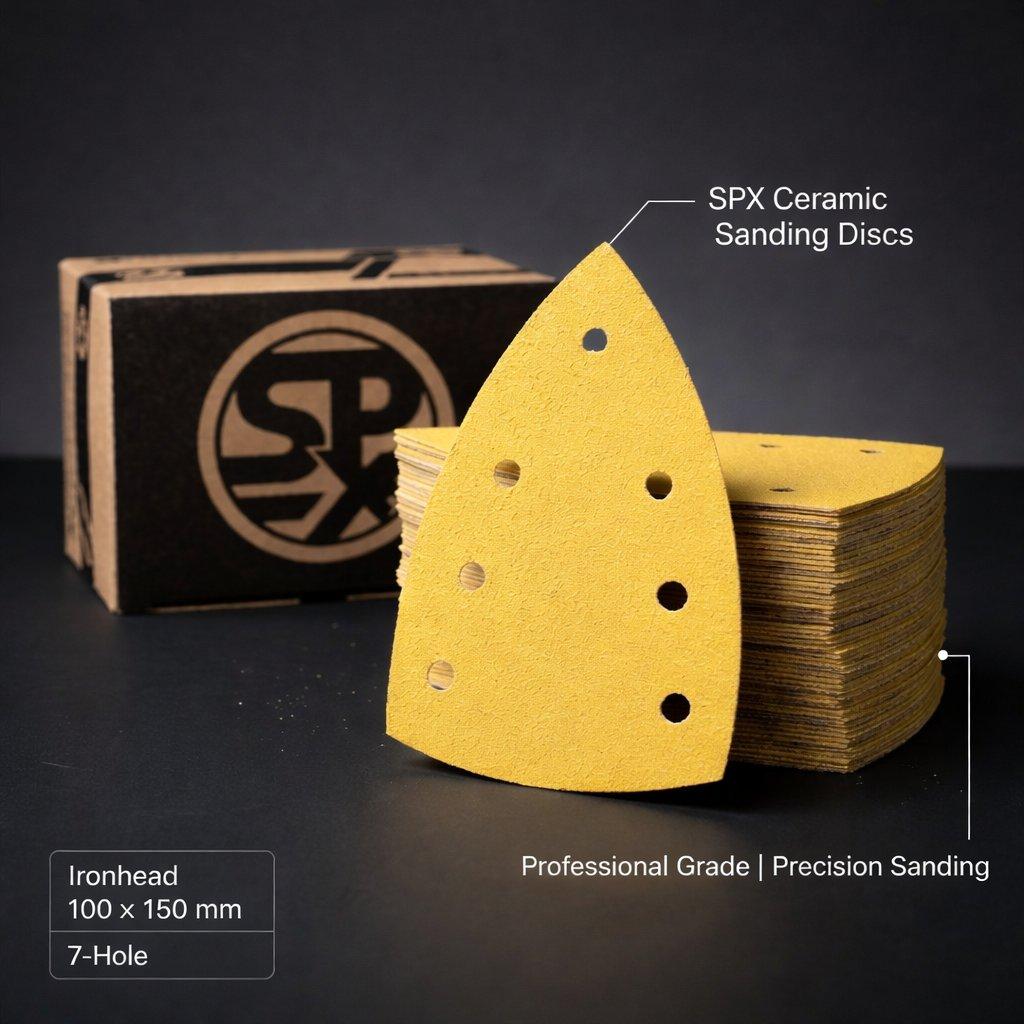
Featured SPX Products
A quick shortlist selected for this article.
Switching trade supply off another brand?
Buying bulk usually means rethinking your supplier too. These guides compare SPX against the brands wholesale buyers most often leave behind, with a focus on supply reliability and cost per job.
- Best Indasa alternatives in Australia — direct local supply instead of import lead times.
- Best 3M Cubitron alternatives in Australia — ceramic performance at a better bulk cost per job.
- SPX vs Indasa sanding discs — local dispatch compared with distributor-dependent stock.
.jpg&w=2048&q=75)