SPX Abrasives Logo
    Home
    Shop
    BlogAboutContact
    Sign In
    150mm sanding discs australia

    150mm Sanding Discs for Automotive, Wood & Metal Work

    SPX supplies 150mm sanding discs for buyers who want one common 6-inch DA size that moves cleanly from heavy cut work into primer prep and finishing. The page stays commercial on purpose: relevant 150mm products first, then the grit, fitment, and comparison guidance buyers usually need before checkout.

    If you already know your workflow is 150mm, this page is meant to shorten the decision path. Product options sit up front, while the lower sections handle grit choice, ceramic vs standard, 15-hole compatibility, and trade buying without turning the page into a padded article.
    Shop 150mm discsSee the automotive system
    150mm-only product focus15-hole optionsTrade packs availableMelbourne dispatch
    Grit guideProof blockCommon complaintsCeramic vs standard15-hole fitmentRelated pages

    Shop 150mm sanding discs

    The grid stays tightly focused on 150mm sanding discs so buyers can confirm size, pack style, and pricing immediately before moving into grit or fitment detail.

    40–80 heavy cut120–180 prep240–400 primer600+ finishing
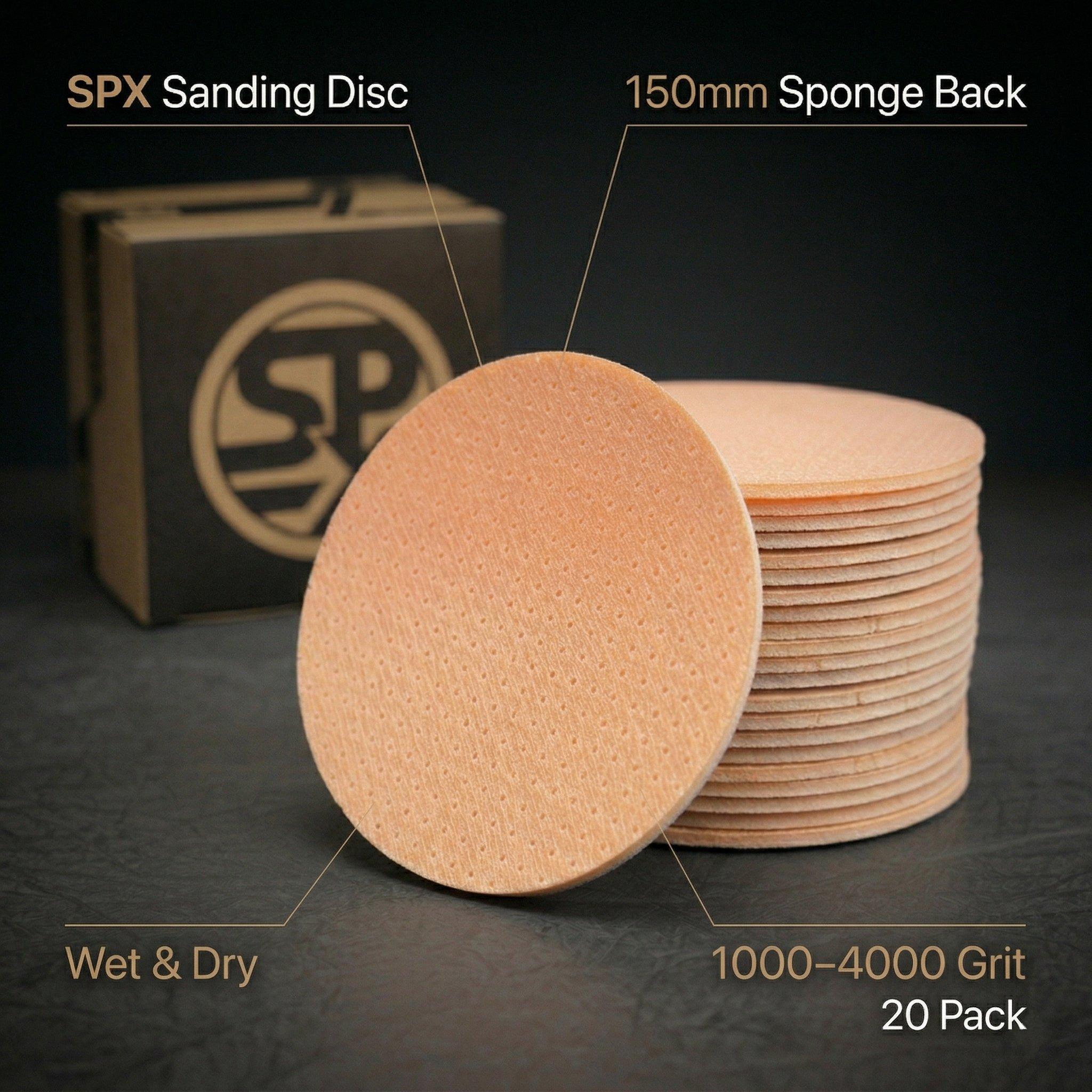
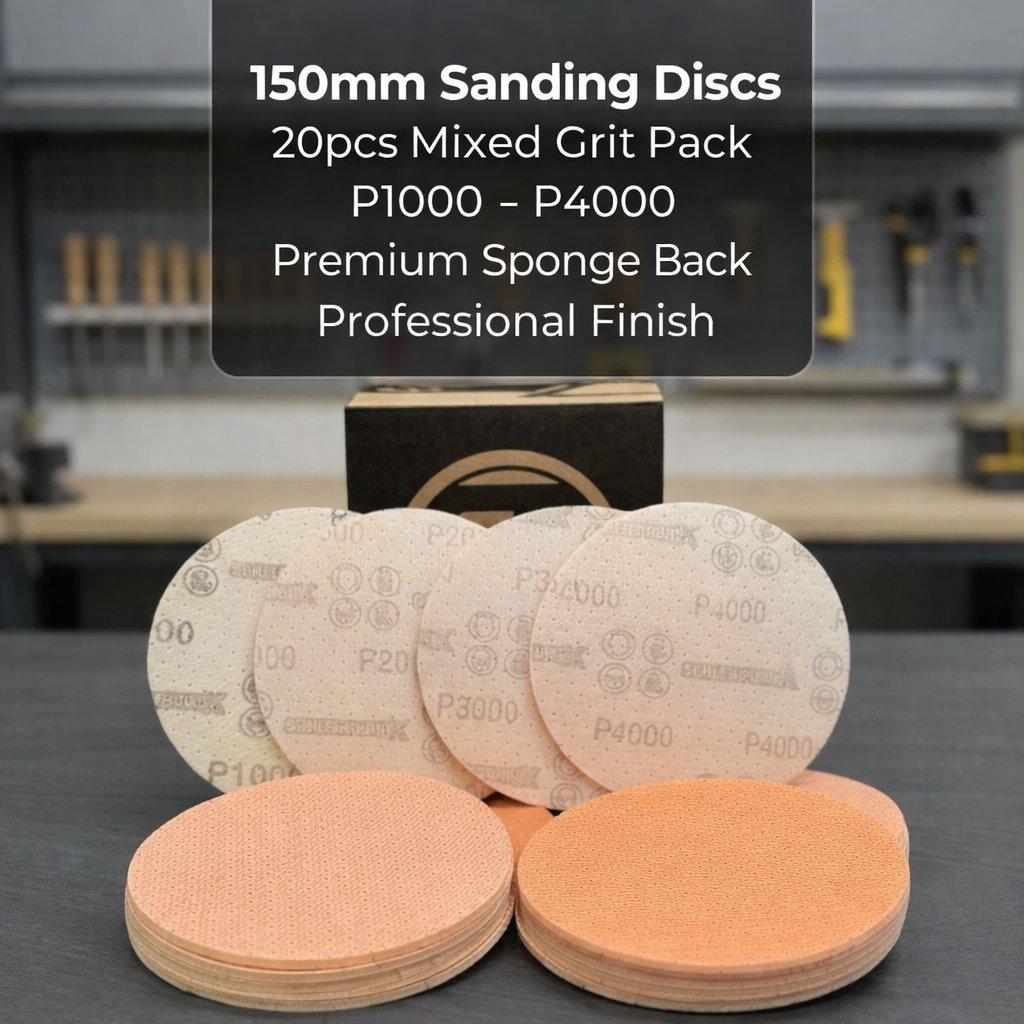
    Sanding Disc Sponge Back Orange Wet/Dry MIXED 150mm 20pcs
    DiscsIn stock

    Sanding Disc Sponge Back Orange Wet/Dry MIXED 150mm 20pcs

    SPX Sanding Disc – Sponge Back Orange (150 mm, Wet/Dry) Ultra-smooth finishing for colour sanding and fine surface refinement. The SPX Sponge Back...

    $88.11
    GST included
    View product
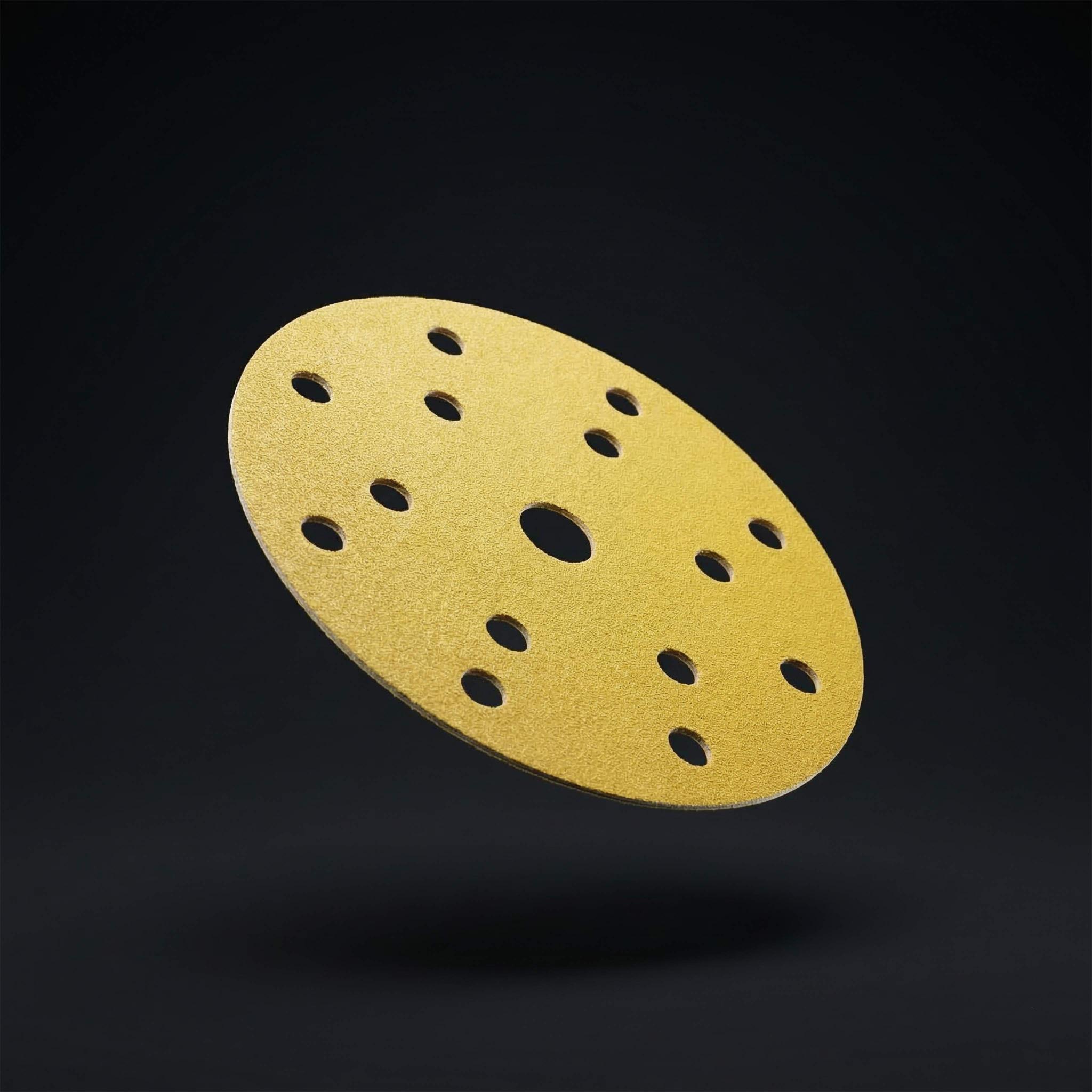
    SPX 150mm Ceramic Sanding Discs - Cuts Faster, Lasts Longer | 15-Hole | 120–1200 Grit | 100 Pack
    DiscsIn stock

    SPX 150mm Ceramic Sanding Discs - Cuts Faster, Lasts Longer | 15-Hole | 120–1200 Grit | 100 Pack

    Pros don’t have time for discs that die halfway through the job. Cheap sanding discs might look cheaper upfront, but on the job they cost you more...

    $78.54
    GST included
    View product
     SPX 150mm Ceramic Sanding Discs - Cuts Faster, Lasts Longer | 15-Hole | 60–80 Grit | 50 Pack
    DiscsIn stock

    SPX 150mm Ceramic Sanding Discs - Cuts Faster, Lasts Longer | 15-Hole | 60–80 Grit | 50 Pack

    You're not paying for discs. You're paying for every minute you waste changing them. Every worn-out disc is a break in your rhythm, machine off, di...

    $43.20
    GST included
    View product
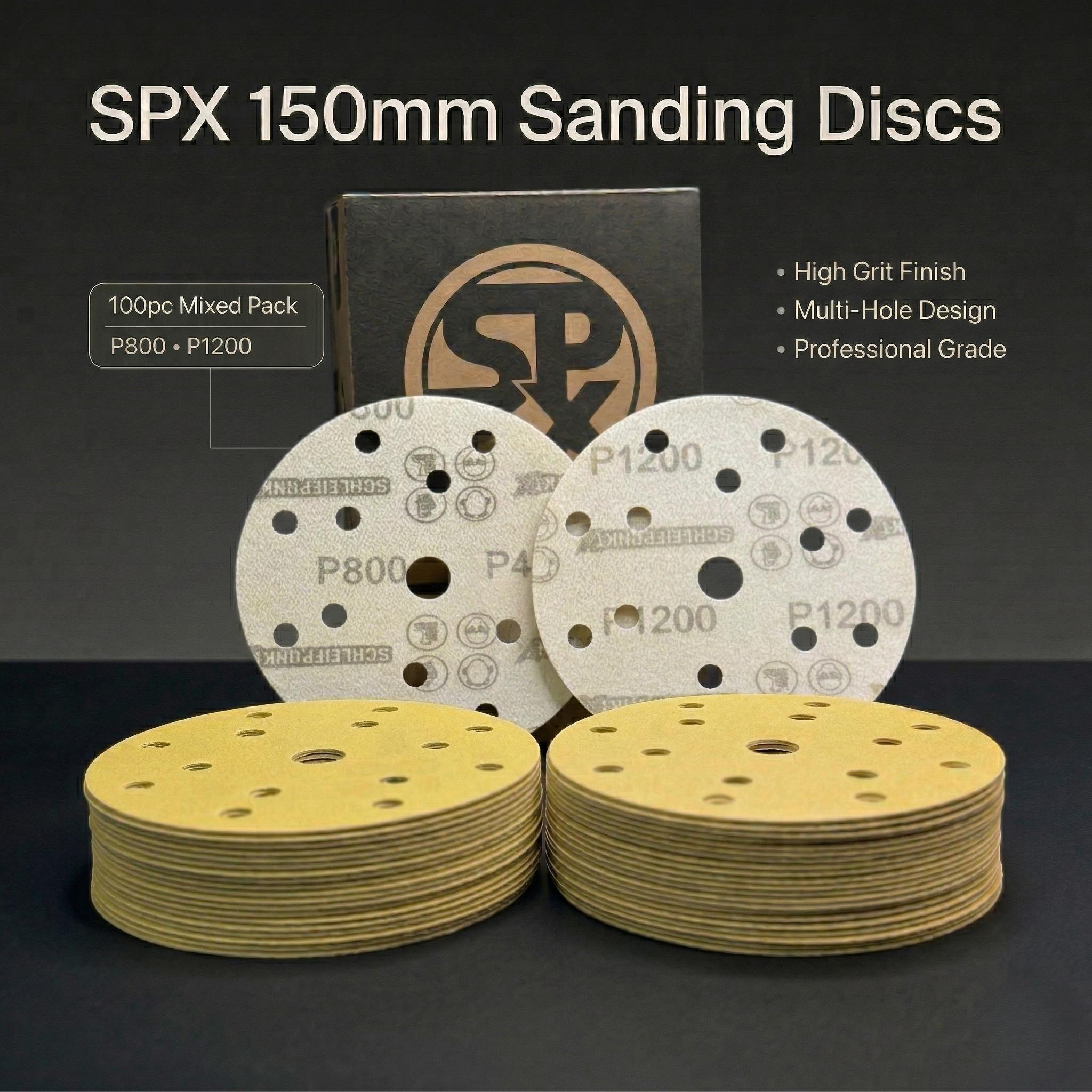
    SPX 150mm Sanding Disc – MIXED Packs (100pcs)
    DiscsIn stock

    SPX 150mm Sanding Disc – MIXED Packs (100pcs)

    Choose from Low, Medium or High Grit SPX 150mm Sanding Disc – Mixed Low Grit Pack (100pcs) Grits: 25 × P80, 25 × P120, 25 × P180, 25 × P240 Get the...

    $86.39
    GST included
    View product
    SPX Sanding Disc Sponge Back Orange Wet/Dry 150mm - 1000-4000 Grit (20 pc)
    DiscsIn stock

    SPX Sanding Disc Sponge Back Orange Wet/Dry 150mm - 1000-4000 Grit (20 pc)

    SPX Sanding Disc – Sponge Back Orange (150 mm, Wet/Dry) Ultra-smooth finishing for colour sanding and fine surface refinement. The SPX Sponge Back...

    $78.54
    GST included
    View product

    Proof from the current 150mm range

    Buyers comparing SPX against 3M, Mirka, and lower-cost import discs usually want proof, not just feature claims. This block uses approved review signals from matching 150mm products already in the SPX range, so the page carries evidence alongside the buying guidance.

    Approved reviews
    28

    Across the 150mm products currently surfaced on this page.

    Average rating
    4.9/5

    From approved reviews on matching 150mm products.

    What buyers usually verify before reordering

    "Mrs would be happier If I lasted as long as these discs!"

    Tony • SPX 150mm Ceramic Sanding Discs - Cuts Faster, Lasts Longer | 15-Hole | 120–1200 Grit | 100 Pack

    • The page only surfaces 150mm sanding discs, not accessory or 100x150 leakage
    • Grit coverage lines up with filler, primer, and finishing stages already used in the workshop
    • Ceramic and 15-hole pathways stay visible when performance or fitment become the next question
    • The range is easy to compare against 3M, Mirka, and cheaper imports without sending the buyer into a generic catalogue maze

    What buyers complain about across 150mm disc systems

    When buyers compare SPX with 3M, Mirka, and cheaper import discs, the same setup complaints keep showing up: backing wear, pad mismatch, dust loading, and edge damage. This section keeps those failure points visible so the buying decision stays practical.

    Recurring complaint

    Discs stop sticking before the abrasive is used up

    What buyers are reacting to

    Hook-and-loop backing wear, pad mismatch, or no pad saver/interface layer in the setup.

    What this page helps you verify

    Size, hole pattern, and fitment are broken out clearly so the buyer can confirm the system before purchase.

    Recurring complaint

    Dust loading kills cut rate too quickly

    What buyers are reacting to

    Poor extraction, wrong hole pattern, or using a disc setup that does not suit the sanding stage.

    What this page helps you verify

    The 15-hole section makes dust extraction compatibility explicit instead of hiding it below generic copy.

    Recurring complaint

    Edges or corners destroy discs too fast

    What buyers are reacting to

    Wrong disc choice for the job, too much pressure, or using the sander in places where the setup is not protected.

    What this page helps you verify

    The grit guide and related-system links keep stage selection and workflow planning visible on the page.

    Recurring complaintWhat buyers are reacting toWhat this page helps you verify
    Discs stop sticking before the abrasive is used upHook-and-loop backing wear, pad mismatch, or no pad saver/interface layer in the setup.Size, hole pattern, and fitment are broken out clearly so the buyer can confirm the system before purchase.
    Dust loading kills cut rate too quicklyPoor extraction, wrong hole pattern, or using a disc setup that does not suit the sanding stage.The 15-hole section makes dust extraction compatibility explicit instead of hiding it below generic copy.
    Edges or corners destroy discs too fastWrong disc choice for the job, too much pressure, or using the sander in places where the setup is not protected.The grit guide and related-system links keep stage selection and workflow planning visible on the page.

    150mm sanding disc grit selection guide

    Use this table to match the right grit to each stage of your repair or preparation work. Running the correct grit at each stage saves time, reduces rework, and extends disc life.

    Grit range

    40–80 grit

    Stage

    Heavy cutting

    Primary use

    Body filler shaping, old paint stripping, rust removal, aggressive stock removal

    Recommended disc type

    Ceramic — maintains cut rate under heavy sustained load without glazing

    Grit range

    120–180 grit

    Stage

    Surface prep

    Primary use

    Blocking filler, levelling rough surfaces, shaping body lines before primer

    Recommended disc type

    Ceramic — consistent cut across large panel areas without loading up

    Grit range

    240–320 grit

    Stage

    Primer sanding

    Primary use

    High-build primer levelling, guide coat flatting, adhesion prep for topcoat

    Recommended disc type

    Ceramic preferred for volume primer work; standard suitable for occasional use

    Grit range

    400–600 grit

    Stage

    Fine prep

    Primary use

    Guide coat removal, colour sanding prep, wet or dry final flatting

    Recommended disc type

    Standard or film disc — finer scratch pattern needed at this stage

    Grit range

    800–1500 grit

    Stage

    Finishing

    Primary use

    Pre-paint prep, denibbing, clear coat flatting before machine polish

    Recommended disc type

    Film disc — minimal scratch depth for clean hand-off into final finish

    Grit rangeStagePrimary useRecommended disc type
    40–80 gritHeavy cuttingBody filler shaping, old paint stripping, rust removal, aggressive stock removalCeramic — maintains cut rate under heavy sustained load without glazing
    120–180 gritSurface prepBlocking filler, levelling rough surfaces, shaping body lines before primerCeramic — consistent cut across large panel areas without loading up
    240–320 gritPrimer sandingHigh-build primer levelling, guide coat flatting, adhesion prep for topcoatCeramic preferred for volume primer work; standard suitable for occasional use
    400–600 gritFine prepGuide coat removal, colour sanding prep, wet or dry final flattingStandard or film disc — finer scratch pattern needed at this stage
    800–1500 gritFinishing

    Why many workshops standardise on 150mm

    Many Australian panel shops, spray booths, and woodworking workshops run 150mm as their main DA size because it keeps the shelf and the sanding process simpler.

    One size, every stage

    150mm covers filler shaping, primer sanding, and paint prep without switching machine formats. That reduces changeover time and simplifies stocking — your team uses one pad size from start to finish.

    Wide grit availability

    150mm discs are available from P40 through to P2000+, which means you can build a complete stage-by-stage grit progression without needing a different sander for fine work.

    Cleaner stock control

    Standardising on 150mm means you only need to manage one diameter across your coarse, primer, and finishing stock. No mixed pads, fewer ordering errors, and easier shelf management.

    Ceramic vs standard 150mm sanding discs

    Ceramic and standard discs are priced differently for a reason. For trade environments running discs all day, the economics usually favour ceramic once labour and downtime are factored in.

    Decision point

    Grain behaviour

    Ceramic discs

    Self-sharpening — grain fractures under pressure to expose fresh cutting edges throughout use.

    Standard aluminium oxide

    Dulls progressively with use — cut rate drops as the grain wears without refreshing.

    Decision point

    Best fit

    Ceramic discs

    High-throughput trade work, repeated sanding cycles, hard coatings, and operators working full days.

    Standard aluminium oxide

    Lighter-duty or price-sensitive work where maximum disc life is not the main priority.

    Decision point

    Disc changes per job

    Ceramic discs

    Fewer changes across a full day — ceramic holds its cut longer under sustained use.

    Standard aluminium oxide

    More frequent changes as performance drops, especially in coarser grits under load.

    Decision point

    Cost per job

    Ceramic discs

    Higher upfront cost, but often a cleaner value case once disc changes and labour time are counted.

    Standard aluminium oxide

    Lower upfront cost, but can cost more per job in busy workshops if discs are changed too often.

    Decision pointCeramic discsStandard aluminium oxide
    Grain behaviourSelf-sharpening — grain fractures under pressure to expose fresh cutting edges throughout use.Dulls progressively with use — cut rate drops as the grain wears without refreshing.
    Best fitHigh-throughput trade work, repeated sanding cycles, hard coatings, and operators working full days.Lighter-duty or price-sensitive work where maximum disc life is not the main priority.
    Disc changes per jobFewer changes across a full day — ceramic holds its cut longer under sustained use.More frequent changes as performance drops, especially in coarser grits under load.
    Cost per jobHigher upfront cost, but often a cleaner value case once disc changes and labour time are counted.Lower upfront cost, but can cost more per job in busy workshops if discs are changed too often.

    15-hole dust extraction — what it means and why it matters

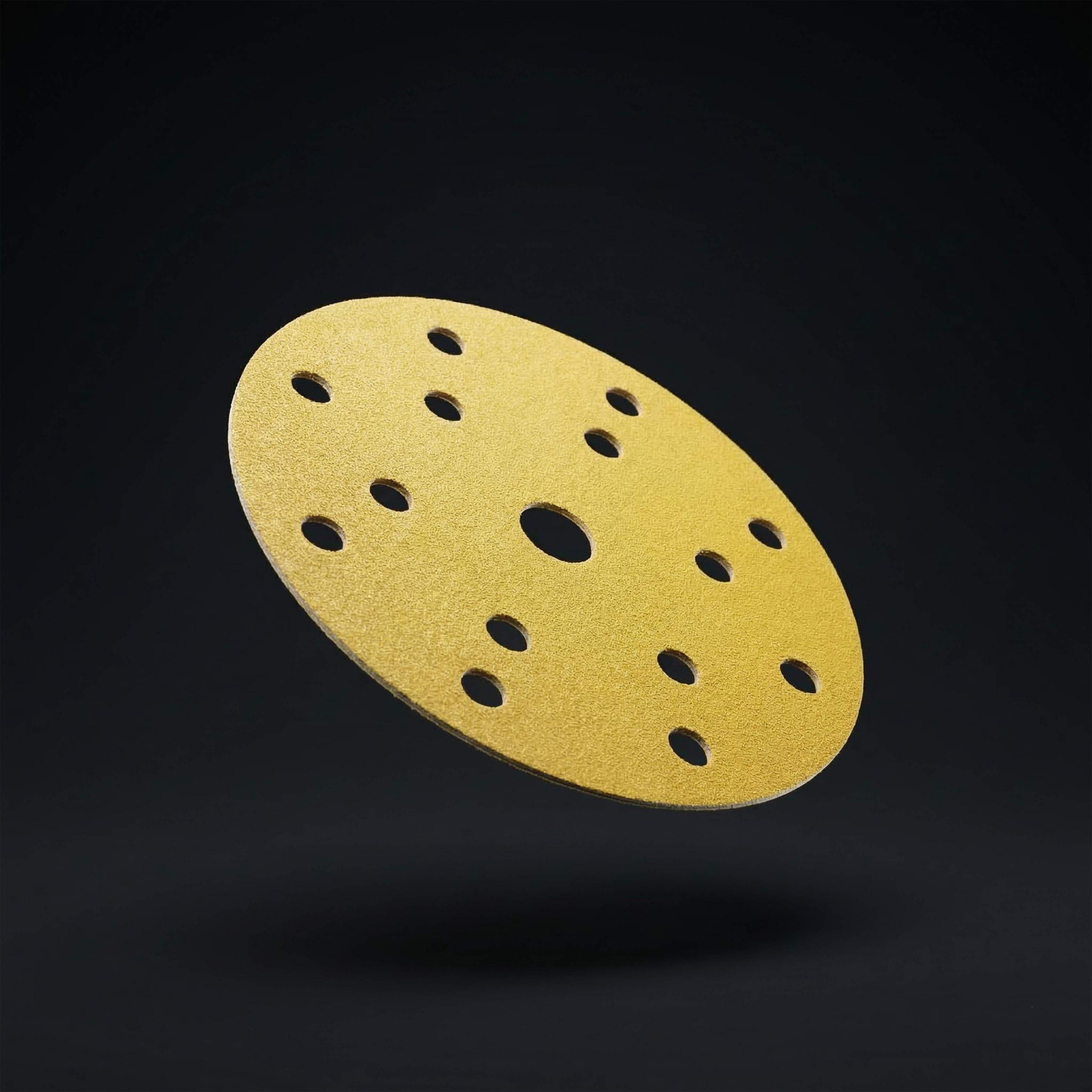
    The 15-hole pattern is a dust extraction layout built into the disc that aligns with matching holes in your backing pad and connects to an extraction hose or vacuum. When the disc, pad, and machine are all matched to the 15-hole standard, dust is pulled away from the sanding face continuously as you work.

    The practical result: less dust build-up on the panel, less disc loading, better visibility of the surface, and a cleaner working environment. For automotive prep work where panel reading matters, this is a genuine performance difference — not just a dust management feature.

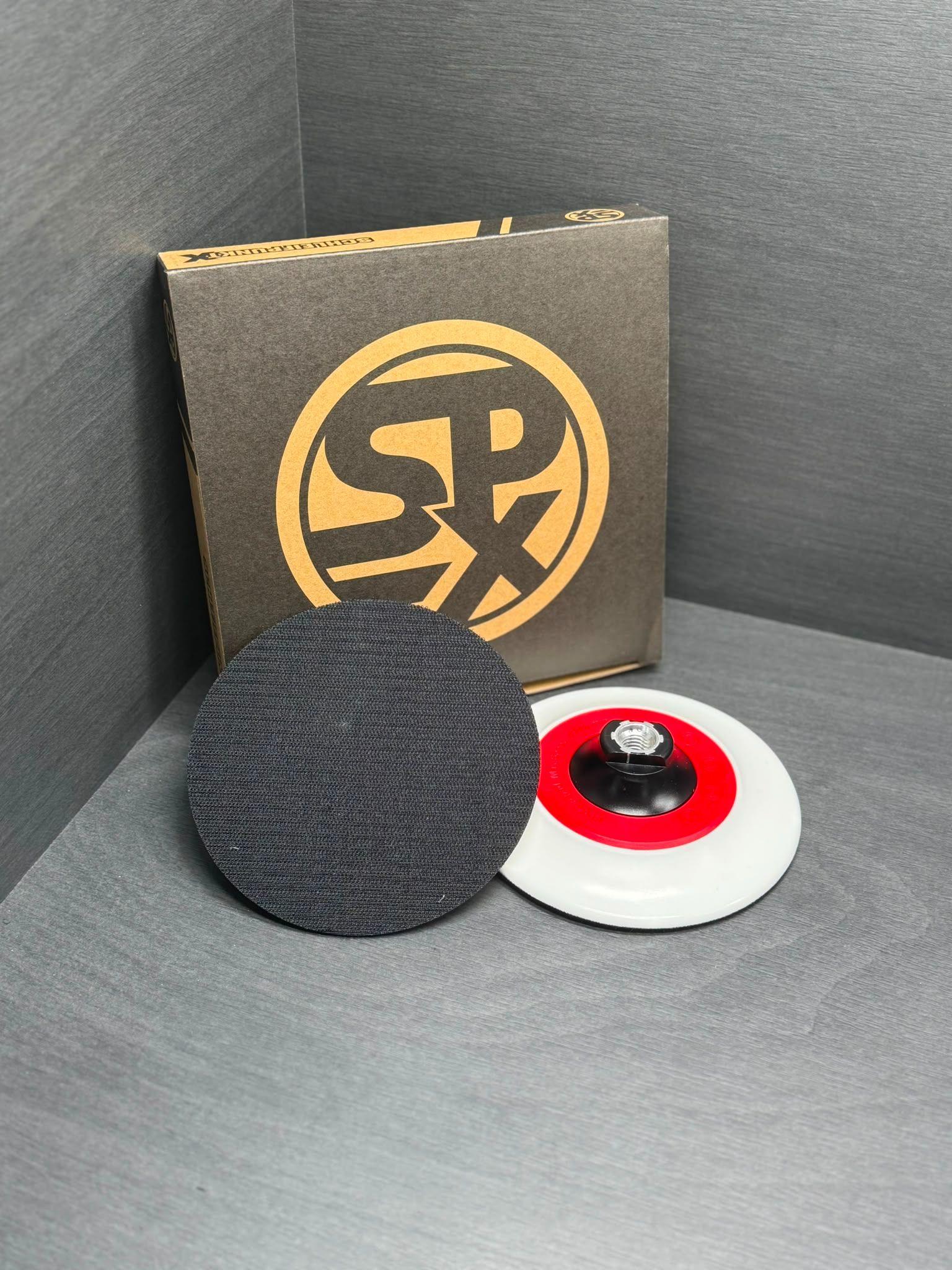
    Before ordering 15-hole discs, confirm that your backing pad has the same pattern. 7-hole pads are not compatible with 15-hole discs even when the diameter matches.

    Browse dedicated 15-hole sanding discs →

    Confirm before you order

    • Disc diameter: 150mm for 6-inch DA sanders
    • Hole pattern: 15-hole pad required for 15-hole discs
    • Backing type: hook-and-loop (velcro-style) is standard in Australia
    • Grain type: ceramic for trade volume, standard for occasional use
    • Grit range: stock at least 3 grits to cover your full prep sequence

    150mm sanding discs for automotive refinishing

    Panel shops choose 150mm because it keeps filler shaping, primer prep, and finishing inside one machine format. Running a single disc size across all three stages reduces pad changes, simplifies the workshop stock list, and makes it easier to train staff on a consistent workflow.

    For automotive use, the key buying decisions are grain type (ceramic for production volume), hole pattern (15-hole for dust extraction), and grit spread (at minimum: a coarse, a primer, and a fine grit for each stage of the repair sequence). The SPX ceramic range is built specifically for this workflow.

    Read the full automotive sanding disc system guide →

    Panel shop minimum stock list

    • P80 or P120 — filler shaping and aggressive correction
    • P180 or P240 — blocking and surface levelling
    • P320 or P400 — primer sanding and guide coat
    • P600 — final prep and pre-paint flatting
    • Ceramic grain across all coarse and mid grits for volume use

    Related pages for faster buying decisions

    Each page below is built around a specific buying intent — performance, fitment, or B2B supply. Use them to narrow your decision without backtracking through the main catalogue.

    Ceramic sanding discs

    The performance case for ceramic — cut speed, disc life, and lower cost per job explained.

    Open page
    15-hole sanding discs

    Fitment and dust extraction guide for buyers who need pattern compatibility confirmed.

    Open page
    Wholesale abrasives

    Bulk pricing, repeat ordering, and wholesale account applications for trade buyers.

    Open page
    Automotive sanding system

    Stage-by-stage grit progression guide covering every step from filler to clear coat.

    Open page

    150mm sanding discs FAQ

    What are 150mm sanding discs used for?+
    150mm (6-inch) discs are one of the most common sizes for DA orbital sanding in panel shops, spray booths, timber workshops, and metal fabrication. Buyers use them across heavy correction, primer sanding, and finer prep because one diameter can cover most workshop stages cleanly.
    What grit should I use for primer sanding?+
    Primer sanding usually sits in the P240 to P400 range, with finer grits stepping in when the finish requirement tightens. Lower grits handle levelling and correction, while higher grits are used when the surface needs a cleaner hand-off before colour or finishing.
    Are 150mm sanding discs suitable for automotive refinishing?+
    Yes. 150mm is widely used in automotive refinishing because it lets one DA format cover filler shaping, primer sanding, and paint prep. That makes it easier to keep a clear grit progression on the shelf without bouncing between disc diameters.
    What is the difference between ceramic and standard sanding discs?+
    Ceramic discs are typically chosen for faster cut and stronger cut retention over repeated use. Standard aluminium oxide can still suit lighter-duty work, but ceramic usually makes a stronger case when the job is repeated often enough that disc swaps and slowdown start to matter.
    Are these discs compatible with 15-hole sanders?+
    Many 150mm discs in the SPX range are available in the 15-hole pattern for use with compatible DA sanders and dust extraction systems. Always confirm the hole pattern on your backing pad before ordering — 7-hole and 15-hole pads are not interchangeable, even if the diameter matches.
    What does hook-and-loop mean on sanding discs?+
    Hook-and-loop (also called Velcro-style) is a backing system that lets you peel and reattach discs quickly without tools. Almost all 150mm DA sanding discs sold in Australia use hook-and-loop. It is faster to change than PSA (pressure-sensitive adhesive) discs and is the standard for production panel shop environments.

    Ready to stock 150mm discs for your workshop?

    Move into the product grid for direct purchasing, or open the wholesale route if you are building a repeat-order account for a panel shop, spray booth, or trade business.

    Shop 150mm discsOpen wholesale account
    Schleifpunkt X Logo

    Premium precision-engineered abrasives for professionals. Designed to be dependable, scaled for trade.

    ABN 28 675 457 315

    MSDS Sheet

    Navigation

    HomeProductsWholesaleBlogAboutContact

    Contact

    Email

    info@spxabrasives.com.au

    Phone

    0433 739 831

    Location

    Melbourne, VIC

    Business Hours

    Monday - Friday8:00 AM - 4:00 PM
    Saturday - SundayClosed

    Serving Retail, Trade & Wholesale

    © 2026 SPX (Schleifpunkt X). All rights reserved.

    |Admin
    Made within Melbourne byOpenRoad Labs
    Pre-paint prep, denibbing, clear coat flatting before machine polish
    Film disc — minimal scratch depth for clean hand-off into final finish