.jpg&w=2048&q=75)
Paint correction & detailing · Australian guide
Wool vs Foam Polishing Pads: Which Is Best for Cutting, Polishing and Finishing Car Paint?
By SPX Abrasives · 13 October 2026 · 12 min read
Wool polishing pads usually cut harder and faster, making them useful for demanding correction work. Foam pads offer more choice: firm foam for cutting, medium foam for swirls and refinement, and soft foam for final gloss. If you're dealing with light wash marks on an otherwise sound clear coat, start with a medium foam pad. Save heavy wool or firm cutting foam for defects that genuinely need the extra bite.
That's the short answer. The right choice still depends on the compound, the machine, the paint and how much clear coat is safe to remove. Here's how to pick a pad without turning a straightforward polish into a respray.
On this page
Wool vs Foam Polishing Pads: Quick Comparison
| Feature | Heavy wool | Heavy-cut foam | Medium foam | Soft finishing foam |
|---|---|---|---|---|
| Main job | Heavy correction | Strong correction with foam control | Light-to-moderate correction and refinement | Final gloss and clarity |
| Relative cut | Generally high | High | Moderate | Low |
| Typical defects | Refined sanding marks, heavier oxidation | Stubborn swirls, scratches and sanding marks | Wash swirls, compound haze, light scratches | Fine haze and finishing marks |
| Finish after use | Often needs refining | May need a finishing pass | Can finish well on many paints | Best suited to the final pass |
| Main caution | Fast material removal, heat and potential holograms | Still aggressive on thin clear coat | May not shift deeper marks | Not a substitute for cutting |
These are general tendencies, not a fixed ranking. Some purpose-built wool pads on matched dual-action systems finish exceptionally well. A hard foam pad with a coarse compound can also be more aggressive than a wool pad used with a fine polish. Judge the complete pad-and-liquid combination.
Need to compare what's available? Browse the SPX wool and foam polishing pad range.
Key Takeaways for the Workshop
| What you're trying to do | Where to start | What to watch |
|---|---|---|
| Restore a daily driver's gloss | Medium foam and a suitable polish | Don't chase every deep scratch |
| Remove heavy defects on sound paint | Test heavy-cut foam; consider wool if needed | Clear-coat thickness and panel temperature |
| Refine a panel after compounding | Medium foam, then soft foam if required | Haze revealed under inspection lighting |
| Work around mirrors and tight contours | Compatible 3-inch pad and backing plate | Sharp edges and raised body lines |
What Is a Wool Polishing Pad, and When Should You Use One?
A wool buffing pad uses natural, synthetic or blended fibres to work a cutting compound across the paint. In a heavy-cut setup, those fibres can remove sanding haze and more demanding surface defects efficiently. That's useful in a panel shop after a controlled refinishing process, or for an experienced detailer tackling badly weathered paint.
It doesn't mean wool is the automatic winner. On a soft black clear coat, heavy wool may remove the original marks quickly but leave its own visible trail. You'll then spend more time bringing the gloss back with foam.
Where heavy wool earns its place
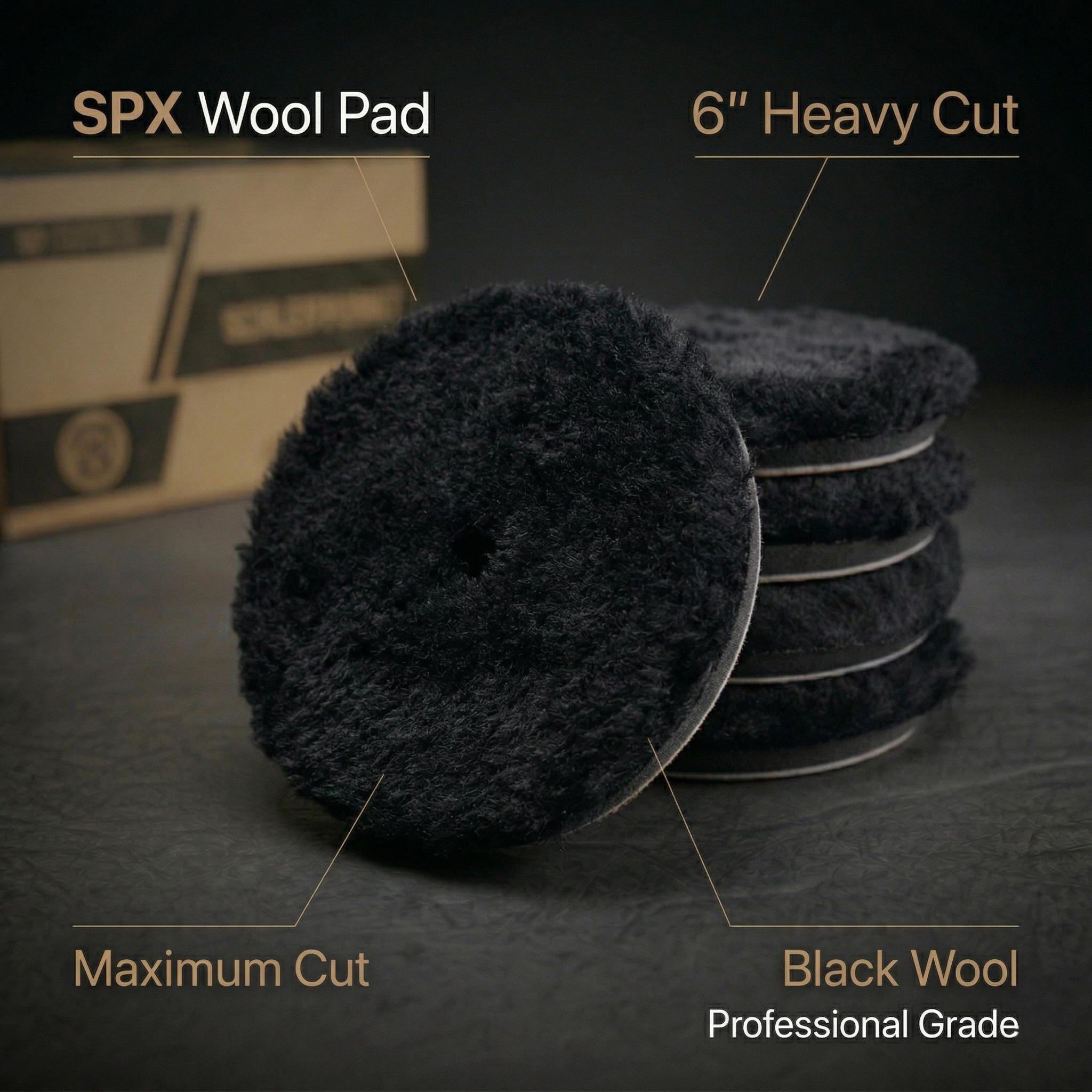
Consider wool when a test spot with heavy-cut foam isn't correcting an appropriate surface defect efficiently, or when you need to remove properly refined sanding marks after a repair. The SPX 6-inch Black Heavy Wool Pad is sold for heavy cutting, compounding and defect removal.
The trade-off: more bite, more responsibility
Heavy cutting removes material. That matters around panel edges, creases, repainted areas and older clear coats. Rotary wool can also leave holograms that are easy to miss until the car is moved into direct light. Work on a clean, cool panel, keep the pad maintained and use the machine and compound as instructed by their manufacturers.
If the defect is through the clear coat, no wool pad is going to fix it. That's a paint-repair job, not a polishing job.
What Is a Foam Polishing Pad, and Which Grade Do You Need?
Foam is a whole family of pads, not one level of cut. Its density, construction and face design affect how it holds the compound and responds under pressure. That's why a heavy-cut foam pad and a finishing pad behave so differently, even when both look like ordinary round sponges.
Heavy-cut foam: the first step up when medium isn't enough
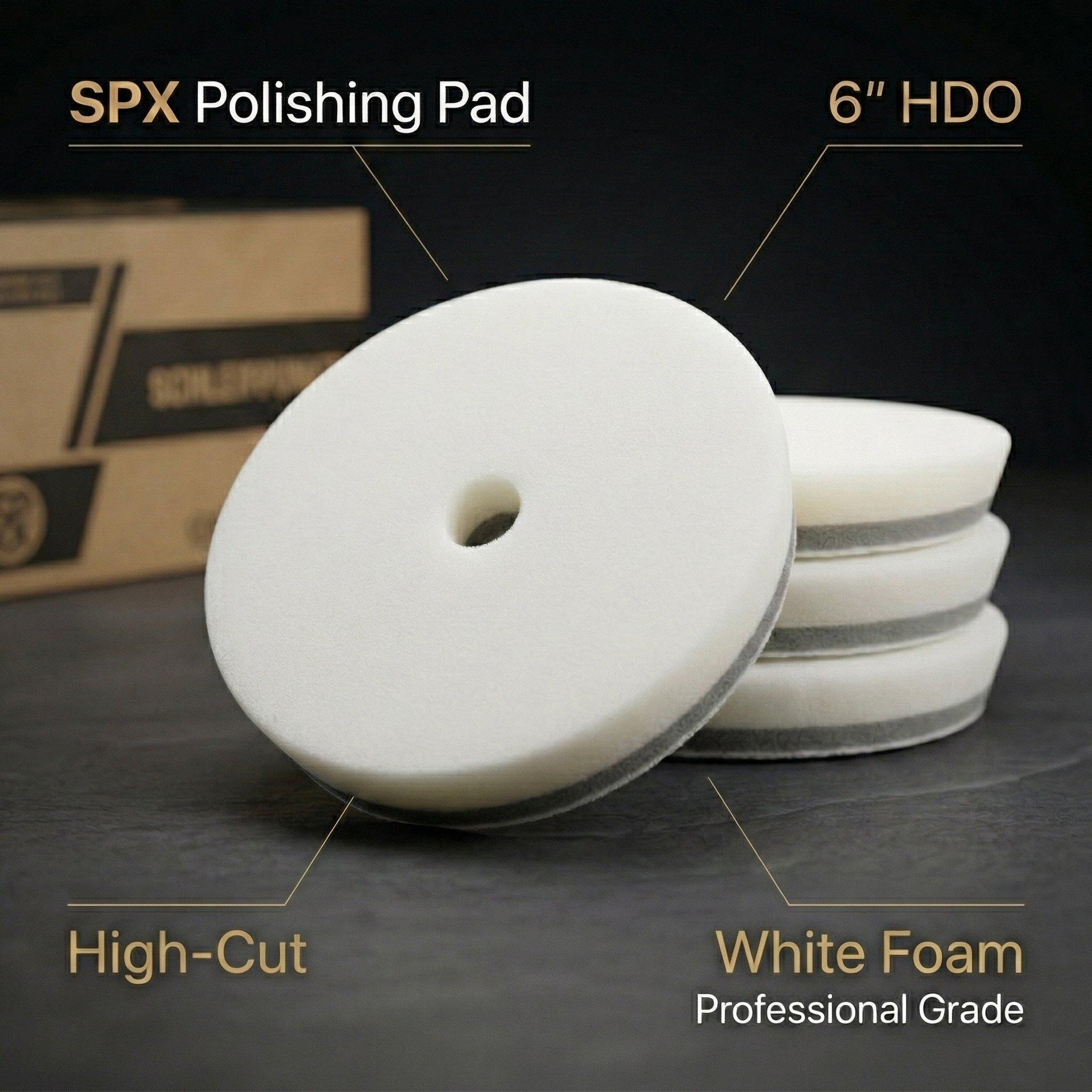
SPX's 6-inch Heavy White HDO Foam Pad is the firmest foam option in this range. It's intended for compounding, surface levelling and stronger correction. Use it when a medium pad leaves correctable defects behind, but only after checking the paint condition. Cutting foam can still generate heat and remove too much clear coat.
Medium foam: the useful all-rounder
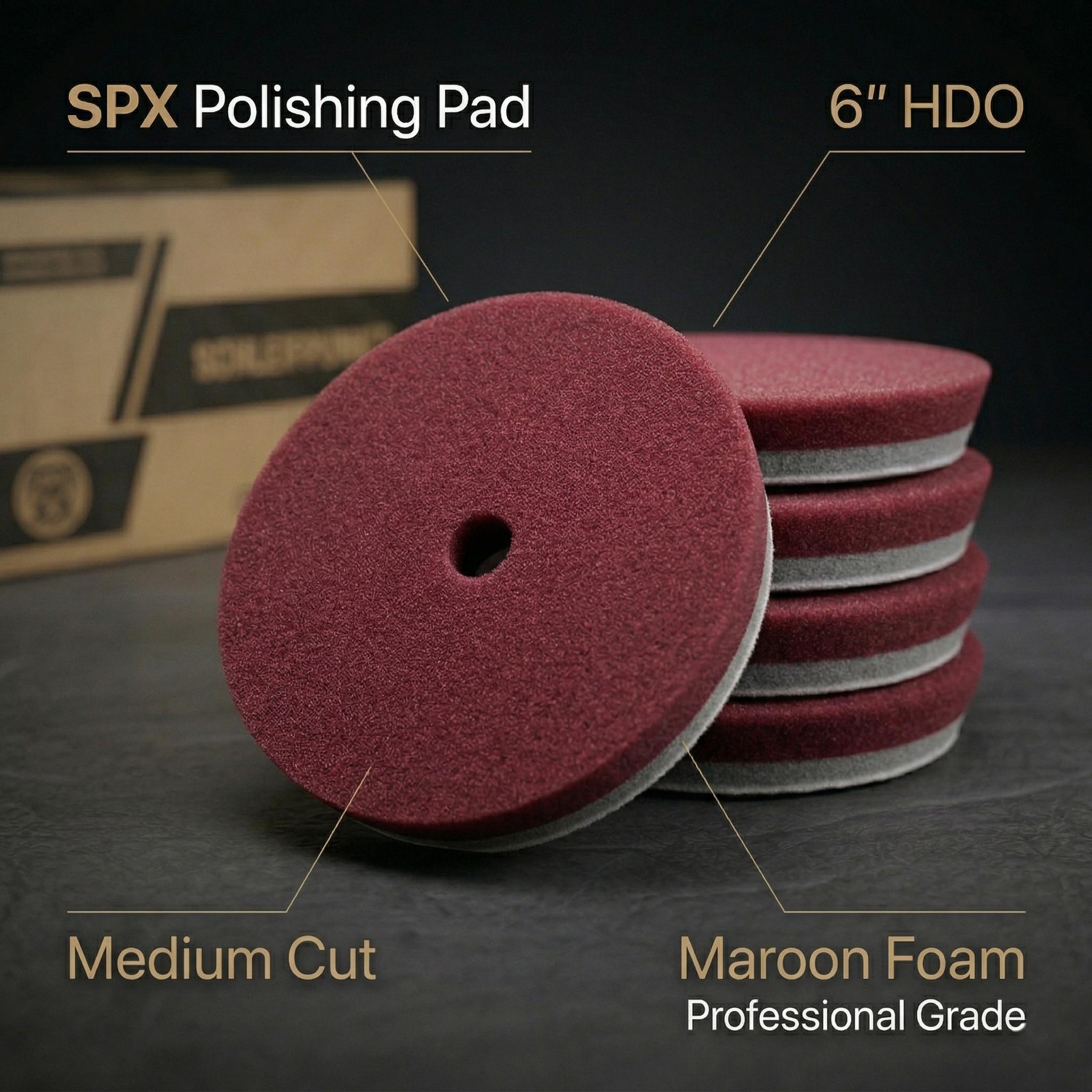
For light wash swirls, general paint enhancement and refining a previous cut, medium foam is often the pad to reach for first. The SPX 6-inch Medium Maroon HDO Foam Pad sits in that middle ground. Matched with the right polish, it can reduce moderate marks and improve gloss without starting at maximum cut.
For a detailer doing regular maintenance work, this is generally a more sensible starting point than a heavy wool pad.
Soft foam: finish the job, don't force the correction
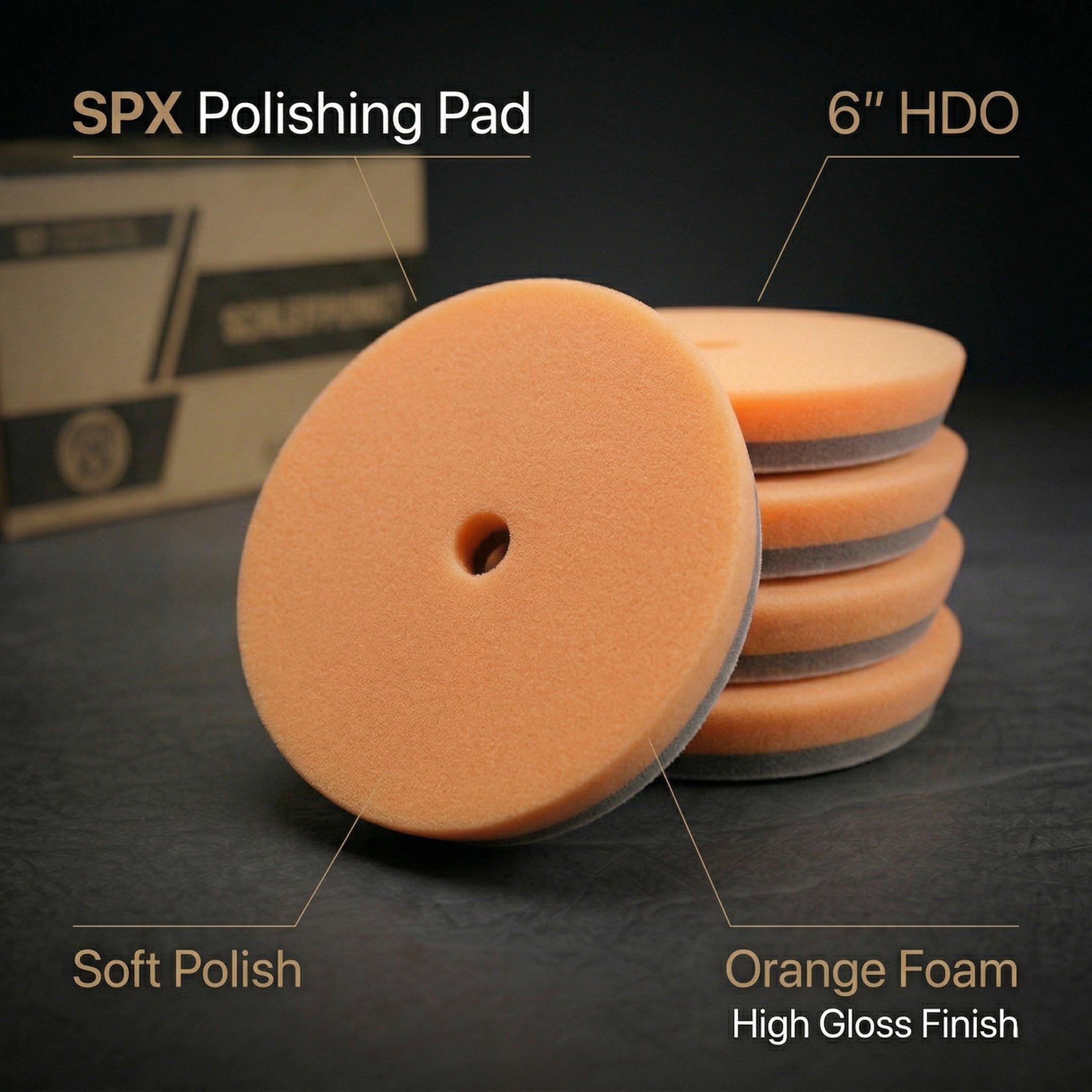
The SPX 6-inch Soft Orange HDO Foam Pad is for fine polishing and the last gloss pass. It suits light finishing haze, delicate final refinement and compatible finishing products. If there are still obvious scratches, changing to soft foam alone won't make them disappear.
Don't buy by colour alone. An orange pad from one manufacturer may be a cutting pad; SPX's orange HDO pad is a soft finishing pad. Always read the pad grade and intended use.
Which Polishing Pad Should You Use for Different Paint Defects?
Start with the defect, then pick the least aggressive combination that achieves the required correction. A compound can change the outcome as much as the pad, so do your test spot before committing to the whole bonnet or door.
- Light wash swirls: Start: medium foam → refine with soft foam only if needed
- Moderate surface scratches: Start: medium foam test → step up to heavy foam if safe
- Heavy oxidation or dull paint: Start: inspect paint condition → heavy foam or wool if correction is appropriate
- Refined sanding marks after repair: Start: suitable heavy-cut system → medium and soft foam refinement
- Holograms or compound haze: Start: medium foam with finishing polish → soft foam if needed
- Scratch through the clear coat: Stop: polishing won't restore missing coating; assess refinishing
| Paint condition | Likely starting point | Before you continue |
|---|---|---|
| Light swirls from washing | Medium foam + polish | Check if one step finishes cleanly |
| Moderate clear-coat scratches | Medium foam; test heavy foam if needed | Check depth; accept marks that are unsafe to remove |
| Heavy oxidation | Heavy-cut foam or wool | Check for clear-coat failure before cutting |
| Fine, refined sanding marks | Suitable cutting foam or wool system | Confirm sanding grade and paint-system guidance |
| Rotary holograms | Medium or soft foam + fine polish | Inspect under a point light and in daylight |
| Peeling, cracked or missing clear coat | No polishing pad | Refer for a paint repair assessment |
Paint hardness, age, previous repairs and available clear coat all change the answer. A factory panel and a recently repaired panel can react quite differently to the same pad. Never assume a deeper scratch can be safely removed just because a pad is capable of cutting quickly.
Wool vs Foam for DA and Rotary Polishers
Using pads with a dual-action (DA) polisher
A DA polisher combines rotation with an orbital movement. It's a practical starting machine for many detailers because it is generally more forgiving than a rotary when used correctly. Medium and finishing foam are common DA choices. Heavy-cut foam is available for stronger work.
Wool isn't automatically rotary-only: some wool pads are engineered specifically for random-orbital machines. Check the SPX pad's machine compatibility before fitting it to your DA. A matching diameter and hook-and-loop backing don't, by themselves, confirm the pad is suitable for that machine's movement.
When a rotary makes sense
Experienced refinishers may choose a rotary and wool for controlled heavy compounding. It can work fast, but machine speed, tilt and time spent in one spot matter. On edges and raised lines, the risk goes up. When the heavy cut is finished, check for trails and refine with the appropriate foam pad.
3-inch or 6-inch polishing pads?
Use 6-inch (150 mm) pads where the panel shape gives you room to work. The smaller 3-inch (75 mm) size is useful around bumpers, pillars, near mirrors and on localised repairs. Smaller doesn't mean risk-free; narrow panels and edges still need a light touch.
SPX has 3-inch and 6-inch polishing pad combos. Both include heavy wool, medium foam and soft finishing foam. The 6-inch white heavy-cut foam is a separate option, not part of those three-pad kits.
Which SPX Polishing Pad Should You Buy?
There's no point buying the most aggressive pad if most of your jobs are light swirls. Match your usual work to the stage below, then choose the pad size to suit your machine and panels.
| SPX pad | Best fit | Why choose it? |
|---|---|---|
| Black Heavy Wool, 6" | Experienced heavy-cut correction | High cut for suitable defects; expect to assess further refinement. |
| White Heavy HDO Foam, 6" | Strong foam cutting | For more demanding marks where medium foam falls short. |
| Maroon Medium HDO Foam, 6" | Swirls and refinement | Good first test for general polishing and many one-step jobs. |
| Orange Soft HDO Foam, 6" | Final finish | Fine-polish stage for gloss and removal of light finishing haze. |
| 3" pad combo / 6" pad combo | Three-stage correction kits | Each includes heavy wool, medium foam and soft foam; choose the size you need. |
Buying for a workshop or detailing business?
Compare the pad grades first, then order the combination that suits the jobs coming through your door.
Shop SPX polishing pads in AustraliaHow to Choose and Test Your Pad Before Polishing
The test spot is where the theory meets the paint. Before you set the machine across an entire bonnet, make sure the panel is clean, cool and properly inspected. If you have reliable paint-depth information, use it alongside the vehicle's repair history; a typical gauge reading does not isolate the clear-coat layer.
- Inspect the finish. Identify swirls, scratches, coating failure, edges and old repairs under a proper inspection light.
- Start with a sensible combination. On light swirls, try medium foam with the appropriate polish before reaching for heavy wool.
- Polish a small test area. Follow the polisher, pad and polish makers' operating instructions. Keep the pad flat where appropriate, work cleanly and avoid lingering on edges.
- Wipe down and inspect. Use a compatible inspection product, then check under angled light for remaining defects, haze and holograms.
- Adjust one variable at a time. Change the pad or polish only when the test shows it's needed. Stop if the paint condition or remaining coating is uncertain.
For the wider repair sequence, including inspection and surface preparation, see the SPX paint defect removal guide.
The original SPX photo test worth adding to this guide
A useful comparison would use four comparable, marked sections of the same painted test panel. Photograph the starting defects first. Record the clear-coat condition, machine, product, pad, number of passes and inspection light. Then shoot each area from the same position, without changing the lighting.
- Heavy wool: Record corrected defects, remaining haze and any need for refining.
- Heavy foam: Record cutting performance and finish under the same light.
- Medium foam: Record swirl removal and the clarity left behind.
- Soft foam: Record the final finish; don't describe it as a heavy-cut test.
This is a photography and testing plan, not a claim that SPX has already run the test. Publish only measured observations and original images.
Frequently Asked Questions About Polishing Pads
Is wool better than foam for buffing cars?
Wool is often better for heavy cutting. Foam is generally more flexible across cutting, polishing and finishing. For lightly swirled car paint, medium foam is usually the better first test.
Can wool polishing pads damage clear coat?
Yes. Any abrasive polishing setup can remove too much clear coat. Heavy wool, particularly on a rotary, needs careful control around thin areas, panel edges and raised lines.
Do you need to use foam after a wool pad?
Often. Heavy wool can leave haze or rotary holograms, so medium or finishing foam helps restore clarity. Some matched modern wool systems finish more cleanly, so inspect the actual result rather than assuming.
What colour foam polishing pad should I use?
For SPX 6-inch HDO pads: white means heavy cutting, maroon means medium polishing and orange means soft finishing. Pad colours are not standardised between brands.
Can you use a wool polishing pad with a DA polisher?
Yes, if the specific wool pad is approved for that DA machine and its movement. Some wool pads are designed for random-orbital polishing; others are not. Confirm product compatibility, backing plate fit and operating limits.
What is the best polishing pad for swirl marks?
For light to moderate wash swirls, start with medium foam and a suitable polish. Move to a heavier combination only if your test spot shows the paint can safely take it.
How do you clean wool and foam polishing pads?
Remove spent compound regularly during use with the method specified for that pad. After polishing, use a pad-safe cleaner and follow the manufacturer's washing, drying and storage instructions. Don't mix products between pads or use an unapproved solvent or high-speed spin-drying method.
Shop Professional Wool and Foam Polishing Pads in Australia
For day-to-day detailing, start by looking at medium foam. If your work involves heavier correction, keep a suitable cutting pad in the kit and a soft foam pad for the final pass. Panel shops dealing with fresh refinish work should follow the coating manufacturer's cure and polishing instructions before touching the paint.
See the complete SPX polishing pad range. If you're ordering regularly for a panel shop or detailing business, enquire about a wholesale account.
Related SPX guides
Paint defect removal: the complete process and Understanding abrasive cut rates for efficient refinishing cover the preparation and repair steps that come before polishing.
Featured Products From This Article
Quick picks already referenced in this guide.